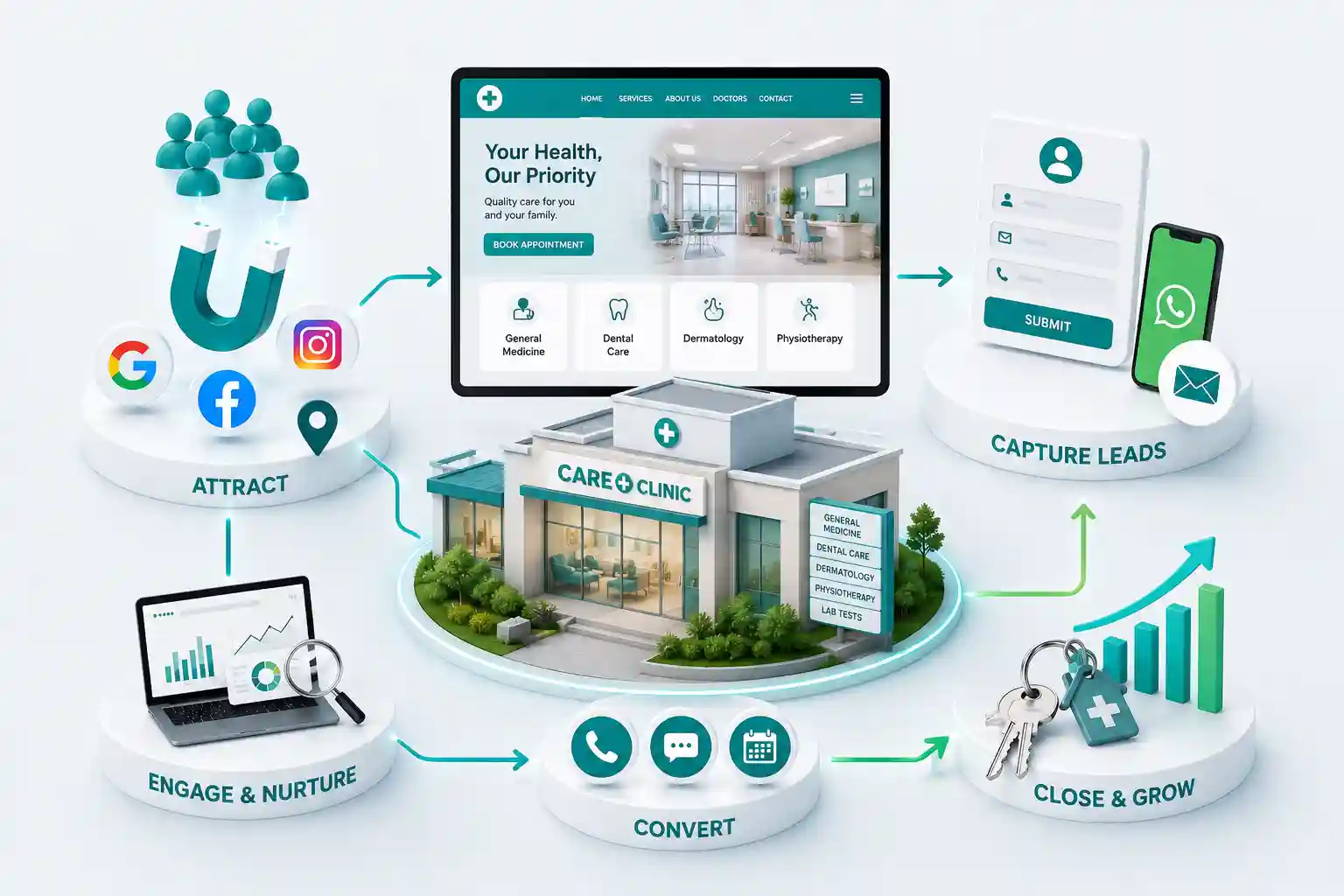
Clinic Website Development Cost in the United States (2026 Guide)
Plan clinic website budgets in the USA with clear cost bands for booking tools, provider pages, HIPAA minded workflows, timelines, and patient acquisition ROI. This guide explains realistic cost bands, the features that move pricing, how long each phase takes, what maintenance includes, and how to judge return without relying on vanity traffic.
US clinic owners often ask for a website quotation before defining booking rules, provider coverage, insurance messaging, or who updates hours. Vendors then price different products under the same label: a brochure site, a template with a contact form, or a full medical practice website with scheduling and multi location support. An under scoped first release forces expensive change orders once staff demand online booking, insurance filters, or bilingual pages. An overbuilt launch ties capital into portals patients never use. A useful budget connects clinic website development cost USA to front desk operations and measurable appointments.
This guide explains realistic cost bands, the features that move pricing, how long each phase takes, what maintenance includes, and how to judge return without relying on vanity traffic.
It is written for clinic owners, practice managers, and marketing leads planning a first medical website or replacing an ageing doctor website in the United States.
What drives clinic website development cost in the USA
Price follows scope. A single location brochure site with a contact form costs less than a multi specialty clinic web design USA project with online scheduling, provider directories, insurance pages, and analytics tied to booked visits. Ask every vendor to itemize templates, content migration, integrations, training, and support so medical website development cost comparisons stay honest.
Content readiness also changes the quote. Practices that already have approved bios, service descriptions, and photos move faster. Practices that need photography, copywriting, and compliance review should budget those line items separately rather than hoping they appear free inside development.
Also budget for accessibility testing, redirect mapping from old pages, and staff training. Clinics that skip those lines often pay later through broken booking links, confused phone scripts, and lost organic rankings after launch. A complete clinic website development cost USA plan treats go live as an operations change, not only a design handoff.
If you operate urgent care alongside specialty clinics, clarify whether both brands share one medical practice website or need separate templates. Shared systems save money when workflows match. Separate sites make sense when audiences, insurance mixes, or scheduling rules differ enough to confuse patients on a single homepage.
Realistic cost bands for doctor website development
As a planning range for 2026, a focused medical practice website for one location often sits in a lower mid market band when content is ready and booking is simple. Growth oriented clinic builds with richer service architecture, provider search, and stronger SEO foundations sit higher. Custom platforms with patient accounts, complex EHR hooks, or multi brand rollouts can exceed those bands.
Brochure and trust first sites: lean scope, contact and call focus
Growth booking sites: service pages, scheduling, analytics, local SEO
Treat these as planning ranges, not fixed price lists. Labor markets, design depth, accessibility work, and third party booking fees all move healthcare website cost. Ask for assumptions in writing before you compare proposals.
Ask for a written assumptions list covering templates, languages, locations, booking vendor fees, content ownership, and post launch support hours. Those assumptions explain most medical website development cost gaps between proposals that look similar on the surface.
Doctor website development for multi provider groups should also price provider onboarding. Each new bio, photo set, and specialty page adds effort. Build a reusable profile pattern early so adding clinicians later stays affordable instead of becoming custom work every quarter.
Look for teams that understand medical practice marketing constraints, not only visual design. Confirm experience with appointment booking website flows, privacy minded forms, and clear ownership of domain, analytics, and backups. Review privacy expectations using authoritative guidance such as the HHS HIPAA overview, then ask your vendor how forms, hosting, and access controls are handled on your project.
Insist on a phased roadmap. Launch the revenue path first: service clarity, trust proof, and booking. Add education content and automation after the front desk trusts the new workflow. Explore related work on our clinic web development page, browse the portfolio, learn about our team, or contact us with your scope notes.
Get a clinic website cost plan for your practice
Share your locations, specialties, and booking needs. We will outline a phased medical website budget with clear next steps.
How US clinics should measure website ROI
Set baselines before launch: organic sessions for brand and treatment queries, form and call conversions, average response time, booked appointments, and show rates. Review monthly with front desk and marketing so analytics become scheduling improvements rather than vanity charts.
Segment by service line, device, and traffic source. New patients researching insurance behave differently from returning patients booking follow ups. Paid landing pages should be judged on cost per booked visit, not only click through rate.
Working with healthcare web vendors in the USA
Clinics get stronger results when clinical leads approve service copy, compliance reviews privacy language, and front desk validates booking rules before go live. Developers need acceptance criteria for forms, calendar rules, analytics events, and mobile keyboard behavior.
Provide photography and branding standards up front
Nominate one approver for go live and content access
Document booking routing for each location and specialty
Keep a backlog of service and condition pages to publish quarterly
Future proofing a US clinic brand online
Insurance networks, advertising platforms, and patient expectations change. An owned website lets you adapt offers, publish education, and capture first party leads without waiting on directory policies. Invest in speed, accessibility, and clear service pages so algorithm and ad cost shifts hurt less later.
Patient portals, telehealth embeds, and AI chat can layer onto a solid core. Skip the reverse order. Polished widgets on a slow, unclear site rarely fix fundamental trust and booking friction.
Content operations for busy clinic teams
Treat provider bios and service pages like inventory. Stale hours, closed locations, and outdated insurance lists erode trust. Assign one marketing owner to approve updates weekly. Providers should submit credentials and talking points in a standard template so updates stay fast.
Monday: review new enquiries and top landing pages
Wednesday: sync hours, insurance, and provider schedules
Friday: publish one patient education piece linking to booking
When leadership asks whether the site is worth the spend, bring the monthly review into the same meeting as scheduling metrics. Tie organic landing pages to booked visits and no show rates. That conversation keeps clinic website investment connected to patient flow instead of aesthetic preference.
Document decisions after each review. Note which pages to expand, which forms to simplify, and which campaigns to pause. Small written decisions prevent the team from rearguing the same website issues every quarter while competitors quietly improve their medical practice website experience.
Finally, protect institutional knowledge. If your marketing coordinator leaves, the next owner should inherit a simple playbook for updating providers, hours, and insurance lists. Websites fail in US clinics less from bad design and more from neglected ownership after launch day.
Build that playbook while the project is fresh. Include login locations, who approves clinical claims, how booking notifications are tested, and where photo originals live. A one page operations note prevents expensive rediscovery six months later when something breaks on a Friday afternoon.
If you are comparing renewal retainers, ask what proactive work is included versus reactive tickets only. Healthcare website cost looks different when the partner reviews forms monthly versus waiting for patient complaints. Proactive care usually costs less than emergency fixes during flu season peaks.
Keep a short list of non negotiables in every contract: mobile booking tested on real devices, analytics installed before launch, redirects mapped, and credentials delivered to the practice. Those four items prevent the most common post launch surprises in clinic website development cost USA projects.
A professional brochure site for a single location often starts in a lower mid market range, while growth oriented medical practice websites with booking and stronger SEO commonly cost more. Custom platforms with complex integrations sit higher. Exact pricing depends on content, locations, and workflow depth.
Vendors may price different products under the same name. Confirm templates, booking tools, content, migration, integrations, SEO, analytics, training, hosting, and support included in each estimate.
A template can work for a small practice with stable services and simple contact needs. It becomes limiting when you need advanced booking, multi location structure, accessibility depth, or scalable service SEO.
Focused sites often take six to ten weeks. Growth builds with richer content and booking can take ten to sixteen weeks. Larger platforms need phased months. Content approvals and integration access influence timelines as much as design complexity.
Security updates, backups, monitoring, form testing, performance checks, technical support, and a clear process for content changes. Higher volume clinics also benefit from analytics reviews and continuous improvement time.
Include booking early if phone volume is high or after hours demand is strong. A simple request form may be enough initially. Full calendar sync can follow once routing rules are documented.
Prepare clean content, appoint one approver, prioritize features by patient value, reuse a consistent design system, and launch in phases. Do not save money by skipping mobile testing, analytics, security, or redirects.
Track qualified enquiries, booked appointments, response time, show rate, and cost per new patient. Include assisted conversions when patients mention service pages before calling.
Your practice should control domain, hosting, analytics, search tools, booking credentials where applicable, and backups. Contracts should state ownership, licences, handover, and post launch access clearly.
Prioritize clinic website features that turn research into booked visits: clear services, mobile booking, trust proof, local pages, and fast performance.
See how clinic website development turns search interest into booked visits through clearer services, stronger trust, faster mobile paths, and better follow up.
Patients find your clinic online, then leave before booking. Fix the friction in forms, doctor info, services, mobile speed, local SEO, and contact options.
A website UX guide for clinics: clearer care discovery, usable practitioner profiles, appointment paths, accessible forms, and dependable content operations.
Healthcare websites that build patient trust, simplify appointments, and help clinics grow. Available for doctors and hospitals across major Indian cities. Every page is planned for stronger search visibility, faster performance, clearer customer journeys, and measurable enquiries.
My Perfect Solutions helps brokers, clinics, restaurants, and growing brands launch fast, SEO-ready websites that turn search traffic into qualified enquiries across India.