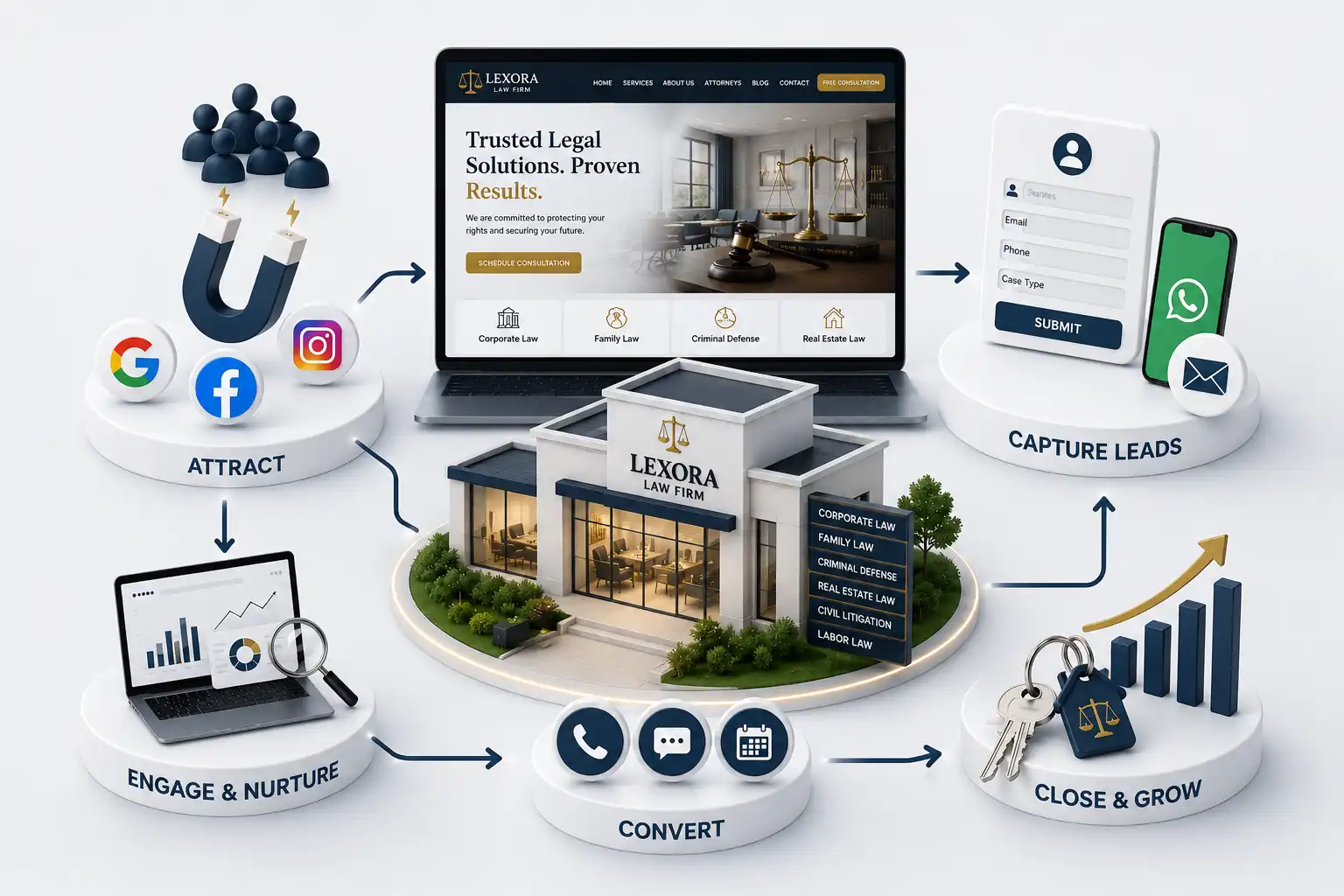
Build Dallas neighborhood landing pages that rank for micro-markets, connect practice intent, use schema, and link to attorney bios that convert consultations. This blueprint shows how to structure law firm neighborhood landing pages Dallas teams can maintain: practice intent mapping, unique content modules, schema, attorney bio links, conversion blocks, and a launch sequence that avoids thin clones.
Dallas firms often publish a single Locations blurb or stamp the same paragraph onto every suburb page. Clients searching for counsel near Uptown, Plano, Frisco, or Downtown find thin clones that say nothing about practice fit, attorneys on the ground, or how to start a consultation. Search engines treat those pages as doorway spam, and humans bounce to directories. Neighborhood landing pages are the growth unit for local legal demand. Done well, they capture micro-market queries, reinforce Google Business Profile relevance, and hand intake a warmer conversation. Done poorly, they dilute authority and waste crawl budget across the entire Dallas metro.
This blueprint shows how to structure law firm neighborhood landing pages Dallas teams can maintain: practice intent mapping, unique content modules, schema, attorney bio links, conversion blocks, and a launch sequence that avoids thin clones.
It is written for Dallas firm marketers, partners, and web teams who want neighborhood hubs that rank and convert without creating a map of empty location URLs.
What neighborhood landing pages should do for Dallas firms
A neighborhood landing page is not a second homepage and not a practice page. Its job is to help a client evaluating counsel in a specific micro-market understand that your firm serves that area, which practices are most relevant, which attorneys are involved, and how to request a consultation by call, form, or chat.
Think of each hub as a briefing: who you help near that neighborhood, what proof you can show, common questions, and clear next steps. The page should link out to deeper practice content and attorney bios rather than trying to explain every matter type in one scroll.
Map practice intent to Uptown, Plano, Frisco, and Downtown
Not every neighborhood deserves every practice. Start with matters you already open in each area. An Uptown page might emphasize business and employment practices, while Plano and Frisco hubs may lean into family, estate, or personal injury demand your desk actually handles. Downtown pages often support commercial clients who expect clear office access and attorney availability notes.
Create a simple matrix before writing: neighborhood, top two practices, attorneys who serve that area, and the primary CTA. That matrix prevents cloned paragraphs and keeps internal links honest. If you cannot name a real attorney and practice for a suburb, you are not ready to publish that hub.
Lead with the practices that produce consultations in that neighborhood
Link to two or three attorney bios with local relevance
Include office, parking, or remote consultation notes when useful
Add FAQs that mirror real intake questions from that market
Keep a single primary CTA group: call, form, and chat
Every neighborhood hub needs a unique introduction, practice cards with links, attorney highlights, proof or process notes, FAQs, and a consultation block. Optional modules include map embeds, office hours, and related neighborhood links. Avoid stock photo grids that add no information.
Conversion belongs in the first viewport and again after the practice section. Clients who arrive from Map Pack or organic search should never scroll past three screens looking for how to talk to intake. Pair research content with call, form, and chat actions that carry neighborhood context into your CRM.
Write FAQs from real intake transcripts when possible. Questions about parking near a Downtown office, remote consultations for Plano clients, or which attorney handles Frisco family matters outperform generic keyword blocks. Each answer should end with a soft path to book a consultation so research traffic does not dead-end.
Use structured data that matches visible content. Neighborhood pages can support LocalBusiness or LegalService identity on the firm, FAQPage where questions are real, and breadcrumbs that clarify hierarchy. Link prominently to attorney bios so clients and crawlers can verify who practices in that market. Do not invent credentials in schema that do not appear on the page.
Attorney bios should reciprocate with links back to the neighborhoods they serve. That internal graph helps users move between people and places and helps search engines understand your entity relationships. Keep bios current with focus areas and consultation paths so neighborhood hubs do not point to stale profiles.
When an attorney leaves or changes focus, update both the bio and every neighborhood hub that featured them. Broken trust signals on an Uptown page can undermine Map Pack clicks that took months to earn. Treat bio links as living inventory, not a one-time launch checklist.
How to avoid thin doorway neighborhood pages
Doorway pages swap the city name and keep everything else identical. Search systems and clients both notice. Write original notes about how your firm serves each area, which practices matter there, and what the consultation process looks like. If two suburbs truly share the same story, combine them or wait until you have unique proof.
Limit the first wave to neighborhoods you can maintain. Three strong hubs for Uptown, Plano, and Frisco beat twenty empty ZIP pages. Add Downtown when office access and commercial practice demand justify a dedicated briefing. Expand only after analytics show consultations, not just impressions.
When you align neighborhood hubs with Map Pack and profile signals, follow Google Business Profile Help and keep NAP consistent between the profile and every neighborhood page.
Launch sequence and measurement
Ship neighborhood pages with analytics events on call, form, and chat. Track which hubs produce qualified consultations and which only attract curiosity clicks. Use that evidence to decide the next neighborhood and which practice modules deserve more depth.
Evergreen hubs can support paid campaigns when the ad promise matches the page. Do not send a Frisco search ad to a generic Dallas homepage. Keep one source of neighborhood truth and vary only CTA emphasis by channel. Amplifying a thin page burns budget; amplifying a hub that already converts organic visitors usually lowers cost per consultation.
Coordinate with intake on which neighborhood hubs get paid support first. Amplifying a page that already books consultations from organic visitors usually lowers cost per qualified lead. Amplifying a thin Downtown clone simply scales disappointment.
Want Dallas neighborhood hubs that convert?
Plan practice intent, attorney links, and consultation CTAs for your first wave.
Select three neighborhoods with proven matter volume
Draft unique intros, FAQs, and practice matrices
Link attorney bios and add schema that matches the page
Install call, form, and chat capture with locality context
Index, monitor consultations for ninety days, then expand
Assign owners for each hub: who updates practice notes, who refreshes bios, and who reviews FAQ accuracy after intake patterns change. Without ownership, neighborhood pages decay into brochure leftovers that stop converting.
When comparing vendors, ask how neighborhood templates, schema, and bio relationships will be maintained after launch. A pretty location grid without an operating model will not protect rankings once competitors publish deeper guides with faster intake handling.
Document a light editorial calendar: one neighborhood refresh every two weeks is enough for most Dallas desks. Update practice emphasis when intake patterns shift, refresh attorney highlights after hiring, and rewrite FAQs when the same questions repeat on calls from Plano or Frisco clients.
Conclusion: neighborhood pages are the Dallas growth unit
Law firm neighborhood landing pages Dallas teams invest in should read like expert micro-market briefings connected to practice pages, attorney bios, schema, and clear consultation next steps. That design wins organic visibility, improves paid efficiency, and gives intake better conversations than a thin city brochure ever will.
Start with fewer hubs done well, instrument them, and expand with evidence. That is how Dallas law firm websites turn neighborhood intent into a durable consultation pipeline instead of another set of empty location URLs.
They are dedicated website pages for a neighborhood or suburb that explain how your firm serves that area, link relevant practices and attorney bios, answer local questions, and convert visitors through call, form, or chat consultation requests.
A practice page explains one legal service. A neighborhood page helps clients evaluate counsel in a micro-market and then choose among practices and attorneys who serve that area.
Launch three complete hubs in areas you already serve, such as Uptown, Plano, and Frisco. Expand only after bios, FAQs, and intake handling stay reliable for those pages.
No. Unique insights, practice emphasis, and FAQs are required for trust and search performance. Shared design templates are fine; duplicated body copy is not.
Yes. Link to attorneys who actually serve that market so clients can verify credentials and start a consultation with a named professional when appropriate.
Use firm identity markup that matches the page, FAQPage only for visible FAQs, and breadcrumbs. Never fabricate ratings, and keep claims aligned with what you can substantiate.
They support relevance when NAP, categories, and service areas stay consistent with the profile. They are not a substitute for a well managed Google Business Profile.
Track consultations from call, form, and chat by neighborhood, then review qualified intakes and booked appointments. Expand hubs only where those outcomes justify maintenance time.
Yes when you have distinct commercial or office-access messaging and real demand. If Downtown content would only duplicate another hub, wait until you can write a unique briefing.
Publishing dozens of thin location clones without practice links, attorney bios, or intake CTAs. Depth in a few Dallas markets beats a map of empty URLs.
Win Dallas Map Pack and organic consultations with practice pages, Google Business Profile discipline, neighborhood coverage, and a lead-ready law firm website.
Google Ads can fill the phone this week. A strong law firm website builds trust, compounds organic demand, and stops paid traffic from bouncing. Here is how to choose—and when to use both.
A practical 2026 law firm website design guide covering trust, practice architecture, mobile consultation paths, accessibility, and durable content operations.
Explore US Law Firm Web Development pages. Every page is planned for stronger search visibility, faster performance, clearer customer journeys, and measurable enquiries.
My Perfect Solutions helps brokers, clinics, restaurants, and growing brands launch fast, SEO-ready websites that turn search traffic into qualified enquiries across India.