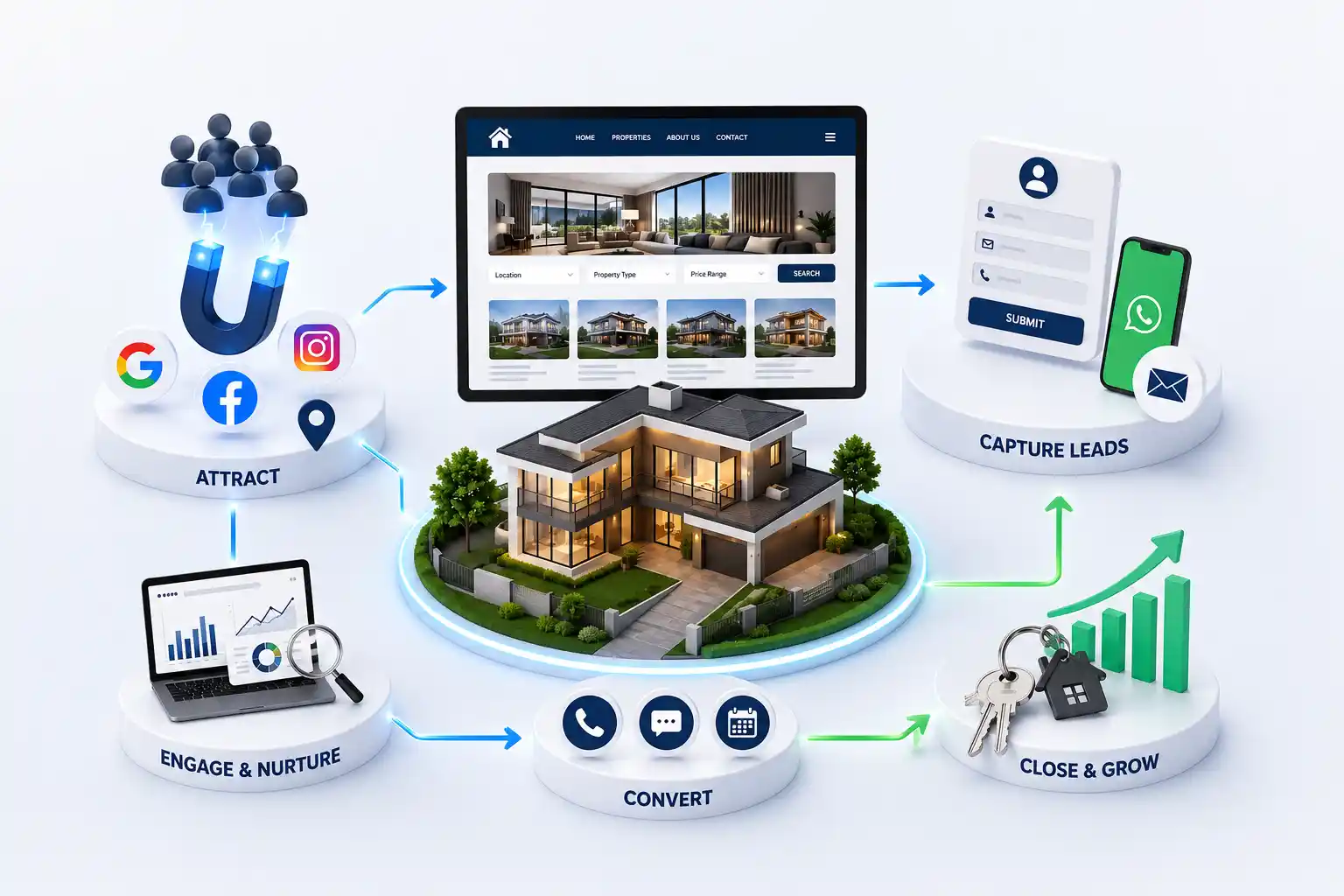
Property Locality Landing Pages in London: 2026 Blueprint
Build London property locality landing pages that rank for micro-markets, showcase live inventory, and convert buyers with clear next steps. This blueprint explains page structure, content modules, property feed connections, internal linking, measurement, and a rollout order that keeps quality high across London and nearby South East markets.
Generic campaign landing pages and copy-paste locality blurbs still dominate London estate agent sites. Buyers land on pages that say nothing distinctive about Westminster versus Camden, show no live inventory, and push a form that ignores the area they searched for. In 2026, property locality landing pages London agencies publish are the unit of both SEO and conversion. Micro-market hubs feed AI answers, support paid campaigns, and give negotiators a context-rich conversation. Thin clones waste crawl budget and ad spend.
This blueprint explains page structure, content modules, property feed connections, internal linking, measurement, and a rollout order that keeps quality high across London and nearby South East markets.
It is for marketing leads, branch managers, and agency owners planning website information architecture for London locality demand.
What a strong London locality landing page must do
A locality page has one job: help a buyer decide whether this micro-market fits their life and then move into relevant listings or a conversation with your team. It is not a city homepage and not a single listing brochure. It sits between research and listing detail.
That means unique positioning for the borough or district, honest constraints, representative price context your desk can defend, proof modules, FAQs, and conversion actions that carry locality context into forms or calls. If any of those pieces are missing, the page underperforms both search and sales.
Think of the page as a briefing a senior negotiator would give a serious buyer on a first call. It should sound specific, current, and accountable. Vague marketing language about lifestyle and opportunity without inventory or next steps wastes the visit.
Teams that skip this page type often overspend on ads that land on weak city templates. Fixing the locality layer usually improves both organic discovery and paid conversion without needing a full redesign of every listing template.
Recommended structure for locality landing pages
Hero with locality name, who you help, and primary CTA
Short market snapshot: home styles, price bands, and buyer profiles
Live or curated search module filtered to the locality
Commute, schools, and lifestyle notes buyers ask about repeatedly
Featured listings or new-build cards when relevant
FAQs that match real search questions
Secondary CTA for viewing request, call, or valuation
Internal links to adjacent localities and main search
Keep the hero promise specific. Buyers comparing Camden and Greenwich should feel the page was written for that decision, not recycled from a London template with the title swapped. Visuals should show real streets or recent listings you represent, not generic skylines.
Place the primary CTA above the fold on mobile without covering critical filters. Secondary proof can sit lower. Many London sessions are short; if the first screen only shows a banner and no action, you lose the busy buyer who opened the page between meetings.
Content modules that matter in 2026
Prioritise modules that answer evaluation questions: typical ticket sizes your team handles, inventory mix, service-charge patterns you see on the ground, and documentation steps for buyers including EPC ratings where relevant. Avoid filler paragraphs about the city being vibrant.
For growth pockets such as Canary Wharf, explain transport links and tenure mix carefully and date-stamp major claims when possible. For established areas like Westminster, focus on inventory scarcity, flat versus house fit, and how your desk sources early opportunities without making unverifiable promises.
Add a short comparison note when two localities are frequently confused in search, such as Islington versus Hackney. Clarify which buyer profiles you serve in each and link across hubs. That reduces bounce and helps search engines understand distinct intent.
Refresh seasonally. School calendar notes, new-build releases, and rate environment changes can shift buyer questions. A quarterly edit pass keeps pages feeling current without rewriting the entire hub from scratch each time.
Module priority by page goal
Module
SEO value
Sales value
Unique locality narrative
High
High
Filtered search block
Medium
Very high
School and commute notes
High
High
Featured listings
Medium
High
FAQ accordion
High
Medium
Generic city history
Low
Low
Campaign-style pages differ from evergreen hubs. Use national guidance on real estate landing pages for paid funnels, then keep locality hubs richer and more durable for organic demand.
Property feed connection and trust signals
Locality pages convert when buyers can see real options. Embed a filtered search grid or curated shortlist updated by your listing process. Stale cards destroy trust faster than having fewer listings. If a farm has limited live stock, say so and offer a property alert signup.
Define an update SLA with operations. Sold or under-offer units should update within portal and compliance rules. Featured cards need a named owner who verifies status before open-house weekends when incorrect claims spread quickly on social and email.
If your Rightmove or Zoopla feed cannot filter by locality cleanly, fix data quality before mass publishing hubs. Broken filters create empty grids that look worse than a short curated shortlist with honest availability notes.
Keep consumer-facing professionalism aligned with guidance from the Property Ombudsman, and display fee transparency, EPC links, and listing status updates as your agency rules require.
Internal linking across London and the South East
Link each hub to two or three adjacent localities you truly farm, to the main property search with area preselected, and to standout listings. From Reading or Brighton service pages, link back only when the sales story overlaps. Reciprocal spam links between unrelated areas dilute relevance.
Use breadcrumbs and related locality chips consistently so crawlers and humans understand hierarchy. Avoid orphan hubs that only appear in a sitemap. Navigation and contextual links from blog posts or listing pages should reinforce the same map of markets.
When a buyer finishes a listing page, offer related locality hubs as the next research step. That path keeps them on your domain instead of bouncing to a portal search for the same borough name.
Track organic landings, scroll depth to search modules, CTA clicks, qualified leads, and viewings by locality page. Pages that attract traffic but no conversations need stronger inventory or clearer CTAs. Pages with conversations but weak close rates may need tighter qualification copy.
Roll out in waves: choose three revenue farm areas, publish complete hubs, operate them for a month, then add the next set. Parallel mass generation creates an editorial debt most London teams never repay. Quality compounds; thin coverage does not.
Share a simple dashboard with negotiators. When agents see which hubs produce viewings, they contribute fresher notes and photos. Locality pages improve fastest when marketing and the desk treat them as shared sales assets rather than SEO chores.
Retire underperforming hubs deliberately. After a fair test period with real traffic, if a page still yields zero qualified viewings, rewrite the brief or fold that farm into a stronger adjacent market rather than keeping a dead URL indexed forever.
Planning locality hubs for your London site?
Prioritise micro-markets, templates, and conversion modules before you scale page count.
Using locality pages for paid and organic together
Evergreen locality hubs can support paid campaigns when the ad promise matches the page. Do not send a Greenwich search ad to a generic London homepage. Likewise, do not build a paid-only landing page that conflicts with the organic hub claims. Keep one source of locality truth and vary only the CTA emphasis by channel.
When testing paid creatives, adjust headlines and offers while keeping the locality body intact. Preserve the unique research sections that earn organic trust. If a campaign needs a different angle, add a short campaign layer that still links into the evergreen hub for depth and consistency.
Coordinate with branch managers on which locality hubs get paid support first. Amplifying a thin page burns budget. Amplifying a hub that already converts organic visitors usually lowers cost per viewing.
Conclusion: locality pages are the London growth unit
Property locality landing pages London teams invest in should read like expert micro-market briefings connected to live inventory and clear next steps. That design wins organic visibility, improves paid efficiency, and gives negotiators better conversations than a thin city brochure ever will.
Start with fewer hubs done well, instrument them, and expand with evidence. That is how London estate agent websites turn locality intent into a durable pipeline instead of another set of empty location URLs.
They are dedicated website pages for a borough or district that explain the area, show relevant live inventory, answer buyer questions, and convert visitors through call, form, or viewing requests.
A listing page sells one home. A locality page helps buyers evaluate the micro-market and then choose among multiple listings your team can show in that area.
Launch three complete hubs in farm areas you already sell. Expand only after search modules, FAQs, and lead handling stay reliable for those pages.
No. Unique insights, examples, and FAQs are required for trust and search performance. Shared design templates are fine; duplicated body copy is not.
Yes when buyers ask about it, but keep claims careful and updatable. Link to official catchment resources where appropriate instead of guaranteeing outcomes.
Yes when the ad targets that borough and the landing page matches the promise. Sending locality ads to a generic homepage usually lowers conversion.
Show a filtered search set or a curated shortlist you can defend in sales conversations. Remove sold or inaccurate cards quickly per agency rules.
Monitor organic and paid landings, CTA clicks, qualified leads, and viewings attributed to that page. Improve modules that attract traffic without conversations.
Yes, reuse the template system, but write distinct content and inventory rules for each market your team truly serves.
Skip areas where you have no inventory, no branch coverage, and no plan to respond to enquiries. Empty hubs create poor experiences and weak signals.
Plan estate agent and agency website budgets in the UK with clear cost bands for portal feeds, custom builds, timelines, maintenance, and lead ROI in GBP.
Plan a practical real estate CRM integration that captures enquiry context, assigns the right agent, supports timely follow up, and gives managers reliable pipeline visibility.
Explore UK Real Estate Web Development pages. Every page is planned for stronger search visibility, faster performance, clearer customer journeys, and measurable enquiries.
My Perfect Solutions helps brokers, clinics, restaurants, and growing brands launch fast, SEO-ready websites that turn search traffic into qualified enquiries across India.