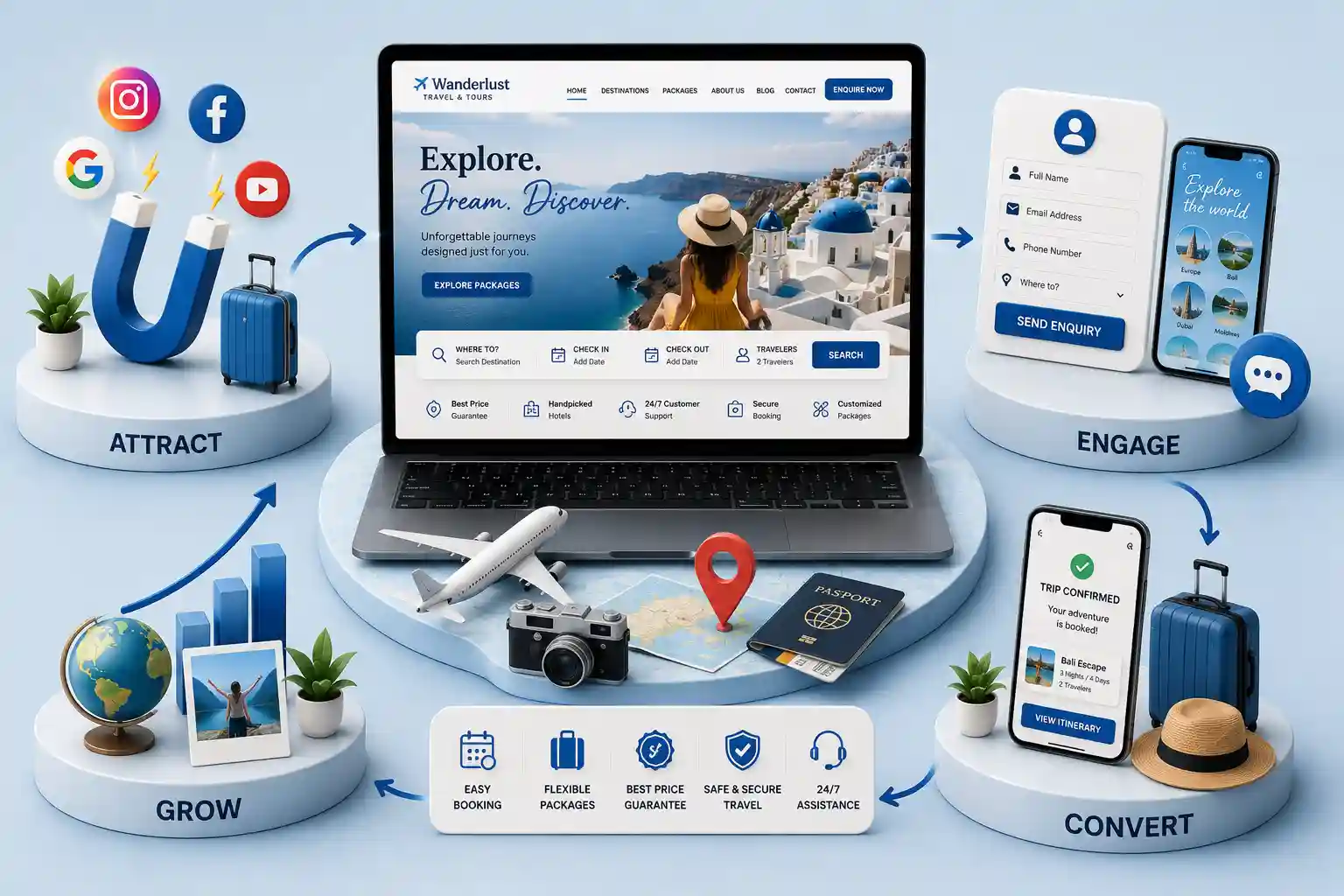
Tour Package Landing Page Checklist for Clear Bookings
Review tour package landing pages for journey fit, inclusions clarity, itinerary honesty, pricing transparency, enquiry paths, and maintainable evidence. This tour package landing page checklist covers journey framing, inclusions and exclusions, itinerary honesty, logistics, pricing context, evidence and media, enquiry design, technical and internal-link hygiene, measurement, and release gates. It helps teams specify a useful page before comparing templates or vendors. It is not travel, pricing, consumer-protection, advertising, tax, or legal advice; authorised specialists should confirm obligations and wording for the actual entity, package, season, and markets served.
A tour package landing page can look complete while still leaving a traveller unable to decide. Attraction lists replace journey fit. Inclusions hide behind vague phrases such as sightseeing as per itinerary. Day plans invent certainty the operator cannot keep. Prices appear without a basis, then change after the first call. Photographs imply hotels or experiences that are not part of the package. The page generates interest, but the sales team spends the next interaction correcting expectations rather than qualifying a genuine booking enquiry. A package page is a commercial decision surface, not a brochure dump. It should help someone understand whether the journey matches their constraints, what is genuinely included, how paced the days are, how price is framed, and what happens after enquiry. Clear pages reduce avoidable back-and-forth and protect trust. Thin or exaggerated pages can attract the wrong enquiries, create disputes later, and resemble content created mainly to capture search demand rather than help people.
This tour package landing page checklist covers journey framing, inclusions and exclusions, itinerary honesty, logistics, pricing context, evidence and media, enquiry design, technical and internal-link hygiene, measurement, and release gates. It helps teams specify a useful page before comparing templates or vendors. It is not travel, pricing, consumer-protection, advertising, tax, or legal advice; authorised specialists should confirm obligations and wording for the actual entity, package, season, and markets served.
It is written for tour operators, travel agencies, destination managers, product owners, marketers, content teams, and web developers creating or rebuilding package pages in India. Teams selling fixed departures, customisable itineraries, group tours, honeymoon packages, or inbound circuits can use the same questions, provided they document the real commercial model rather than forcing every offer into one generic template.
Frame the journey fit before listing attractions
Open with the traveller problem the package solves: duration, pace, companion type, interest theme, fitness expectation, and who it is not for. A landmark list does not replace that framing. Name the package type in ordinary language, state the primary geography, and explain the operating model, such as fixed departure, private customisable, or small-group guided. If the page covers a family of similar packages, say how they differ before diving into day plans.
Define audience boundaries without soft claims
Journey-fit questions for a package page
Decision
Useful answer
Weak substitute
Who it suits
Companion type, pace, and interest theme
Perfect for everyone
Who it excludes
Honest fitness, age, or access limits
No limitations stated
Duration model
Nights, days, and buffer assumptions
Flexible timing only
Operating style
Fixed, private, or small-group rules
Customised for you
Season note
When the offer applies or changes
Year-round same experience
Next step
Enquiry or booking path that matches readiness
Call now only
Clarify inclusions, exclusions, and optional extras
List what the package price covers in concrete categories: accommodation class or named property type, meals, transfers, tickets, guides, permits, and internal transport. Pair every inclusion list with exclusions such as flights, visas, personal expenses, tips, optional activities, peak supplements, and items subject to local conditions. Optional upgrades should state who arranges them, when they are confirmed, and whether they change the base package identity.
Avoid vague inclusion language
Replace sightseeing as per itinerary with named visits or clear alternatives
State whether hotel names are confirmed, representative, or subject to change
Explain meal plan codes in plain language
Separate prepaid tickets from tickets bought on arrival
Flag experiences that depend on weather, permits, or minimum numbers
Identify services arranged by third parties versus the agency
Write honest itineraries and logistics
A day-by-day plan should help someone judge pace, travel time, rest, and decision points. Over-precise schedules that cannot survive traffic, weather, or ticket queues create false certainty. Prefer useful sequencing: arrival handling, major visits, transfer windows, free time, and overnight locations. State where the plan is fixed and where local conditions may rearrange order without changing the core inclusions.
For deeper itinerary search and structure guidance, review the travel itinerary page SEO checklist alongside this landing-page review so package and day-plan pages reinforce the same facts.
Document logistics assumptions travellers need
Name departure and arrival cities or meeting points when relevant
Explain transfer types and approximate journey character without invented durations
State baggage, accessibility, or fitness expectations that affect participation
Clarify guide language and group-size rules when they shape the experience
Note check-in, permit, or document steps the traveller must complete
Identify points where the itinerary becomes customisable
“An honest itinerary describes the journey a team can repeatedly deliver, not the highlight reel a marketer hopes search engines will prefer.”
Present pricing context without manufactured urgency
Show the price basis: per person sharing, per couple, per vehicle, or starting from for a defined season and occupancy. Explain what changes the figure, such as room category, departure date, group size, festival periods, or transport class. If the page cannot publish a final figure, say what information is required for a quotation and what the quotation will cover. Avoid countdown timers, false scarcity, and unverifiable discount claims.
Pricing transparency checks
Element
Publish when known
Handle carefully
Base price
Amount with occupancy and season
Orphan numbers with no basis
Variables
Date, room, transport, group effects
Hidden peak supplements
Taxes and fees
What is included or estimated separately
Ambiguous all-inclusive claims
Payment stages
Deposit and balance timing if used
Unclear forfeiture language
Cancellation
Where current terms live
Copied legal text without owner
Currency
Display currency and conversion note
Mixed currencies without label
Google's guidance on creating helpful, reliable, people-first content is a useful external reference when judging whether a package page helps travellers evaluate an offer or mainly targets search queries.
Support claims with evidence and responsible media
Use photographs, maps, and sample day plans that the business has rights to publish and that represent the package class offered. Attribute partners when required. Prefer captions that identify place type and relevance over keyword-stuffed image text. If testimonials appear, keep them attributable, permissioned, and free of invented metrics. Comparable past journeys can illustrate style when labelled as comparable rather than as proof of the exact hotel block currently sold.
Connect local proof without doorway patterns
When a package is promoted for counselling or departure from a city, link to a useful city context rather than a thin place-name page. Local evidence should help someone understand service reality, not manufacture presence. The same facts about hours, contacts, and package availability should appear across the package page, city page, and profile destinations.
Need clearer tour package pages that convert qualified enquiries?
Map journey fit, inclusions, itinerary honesty, pricing context, and enquiry routing into a maintainable package architecture.
Design an enquiry path that matches readiness
Choose a primary action the team can honour: request a quotation, check departure availability, start a custom plan, or book a fixed departure if that workflow truly exists. Collect only the fields needed to triage dates, party size, departure city, package interest, and contact route. Do not force passport numbers or payment details into an early public form unless a governed booking system requires and protects them.
Set confirmation expectations before submit
State that submission is a request for review, not a confirmed booking, seat hold, visa outcome, or price lock unless those systems are real and connected. Show expected response timing in operational language the team can keep. Provide a receipt reference, safe summary, and contact route. Keep sensitive follow-up in authenticated or staff-managed channels after initial qualification.
Release, maintain, and measure package pages
Treat the package page as an operating document with an owner, review date, and source of truth for inclusions, hotels, prices, and seasons. Technical checks still matter: unique metadata, stable canonical URL, crawlability, accessible structure, performant images, and internal links to related packages, itineraries, city pages, About, and Contact. Measure qualified enquiries, disqualification reasons, and content corrections requested by sales—not rankings alone.
Verify inclusions, exclusions, and season notes against the product sheet
Test mobile readability of itinerary and pricing sections
Confirm enquiry routing, receipts, and fallback contacts
Check image rights, captions, and alternative text
Review internal links for orphan or contradictory pages
Inspect indexing, canonical tags, and broken media
Lead with journey fit: who the package helps, duration model, operating style, geography, and honest boundaries. Then present inclusions, exclusions, itinerary pacing, logistics assumptions, pricing context, evidence, and a clear enquiry path. Attraction lists and galleries support the decision only after the traveller understands whether the offer matches their constraints.
Detailed enough that a traveller and a sales consultant share the same understanding of accommodation class, meals, transfers, tickets, guides, and major optional extras. Pair inclusions with exclusions such as flights, visas, tips, personal expenses, and season-dependent items. Vague phrases that defer every detail to a later call usually create mismatched expectations.
Show a fixed figure when the commercial model supports it with a clear basis and season. When price depends on dates, occupancy, or customisation, publish the basis and the information required for a quotation instead of inventing certainty. Avoid false scarcity and unverifiable discount claims. State what a quotation will and will not lock.
Describe sequencing, overnight locations, major visits, transfer character, and free time in a way the team can repeatedly deliver. Flag where order may change because of weather, permits, or ticket availability while keeping core inclusions stable. Avoid minute-by-minute schedules that cannot survive real operations. Label customisable sections clearly.
Use rights-cleared images and materials that represent the package class offered. Caption them accurately, attribute partners when required, and avoid implying hotels or activities that are not included. Testimonials should be permissioned and free of fabricated results. Comparable past journeys need clear labelling when they are illustrative rather than identical to the current sale.
Link to useful city or office context only when the business genuinely serves that market and the linked page has distinct evidence. Keep identity, hours, contacts, and package availability consistent. Do not invent branch pages solely to support package keywords. Local and package content should reinforce the same operating sheet.
Collect the minimum needed to triage: contact route, preferred dates or flexibility, party size, package interest, departure or counselling city, and any essential constraint the business uses for fit. Leave passport numbers, full payment details, and high-sensitivity documents for a governed later step unless a real booking system requires and protects them at that stage.
No. Helpful, accurate, maintainable content can support discovery and conversion, but no checklist guarantees a ranking position. Search results vary by query, competition, location, device, and many other factors. Approve pages against usefulness, evidence, technical quality, and qualified outcomes rather than promised positions.
Review whenever season, hotel allotment, inclusions, transport, pricing basis, or response process changes, and on a scheduled cadence even when no campaign is live. Assign an owner, record the source of truth, and reconcile sales corrections after peak periods. Stale inclusions and prices are a trust and operational risk, not only an SEO issue.
Chat is fast. Forms capture detail. See when travel agencies should lead with WhatsApp, when the website wins, and how a dual path stops lost package enquiries.
A practical 2026 launch guide for Indian travel agencies: choose the right MVP, publish package and destination pages, capture enquiries, and phase payments without overbuilding.
Turn package and itinerary interest into qualified travel enquiries with clear trip pages, trust signals, fast forms, and follow-up-ready website features.
Plan a proportionate travel enquiry form with clear purpose, data minimisation, consent where appropriate, controlled document handling, access, retention, and incident response.
Travel websites with packages, itineraries, and enquiry flows designed to book more trips and tours. Available for travel agencies across major Indian cities. Every page is planned for stronger search visibility, faster performance, clearer customer journeys, and measurable enquiries.
My Perfect Solutions helps brokers, clinics, restaurants, and growing brands launch fast, SEO-ready websites that turn search traffic into qualified enquiries across India.