Local SEO for Real Estate Agents and Brokerages in India
Improve visibility for city and micro-market property searches with practical Google Business Profile, locality page, review, citation, and website SEO guidance. Actionable steps for area pages, on-page basics, review strategy, technical hygiene, and how your property website supports local discovery without replacing it.
Agents compete for the same city keywords while relying on paid portals and sporadic social posts. Organic local visibility feels unpredictable, especially when generic directory listings outrank a proper agency site. Local SEO compounds. When your website, Google Business Profile, and reviews align, you earn inbound calls without paying per click. That margin matters in competitive metros and growing tier-2 markets alike.
Actionable steps for area pages, on-page basics, review strategy, technical hygiene, and how your property website supports local discovery without replacing it.
Broker-owners, digital marketing staff at agencies, and consultants responsible for locality growth targets.
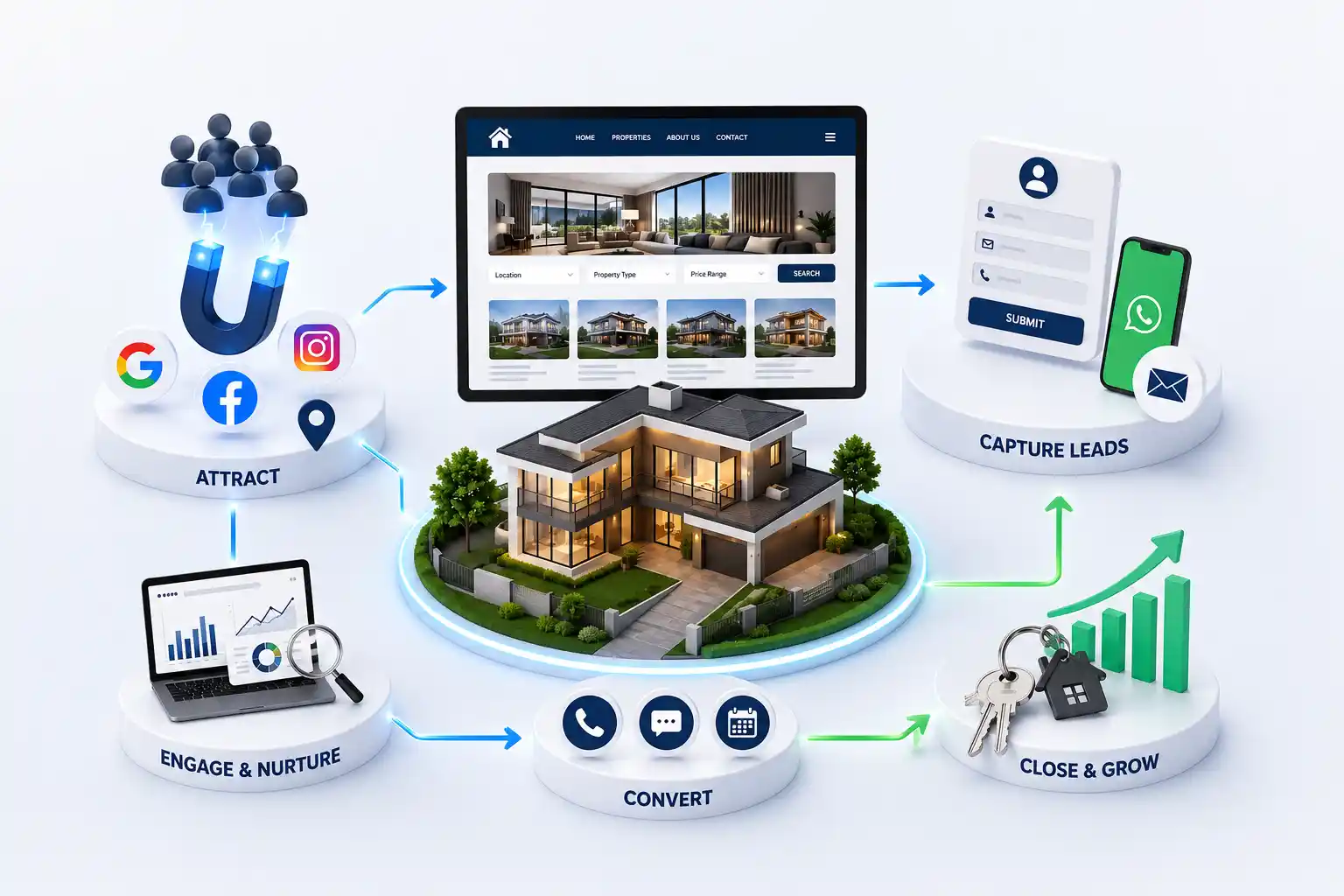
Local SEO is a system, not a one-time task. Treat your website as the content hub and every other profile as a satellite that reinforces the same name, address, and phone (NAP).
Start with Google Business Profile discipline
Complete categories, service areas, hours, and photos that reflect real office visits. Post weekly updates about new listings or market notes. Respond to reviews professionally; unanswered reviews signal neglect.
Follow Google Business Profile guidelines when representing offices, service areas, business names, and practitioner listings. Accurate profiles are safer than keyword-heavy names or virtual locations that do not meet eligibility rules.
Build genuine area and project landing pages
Create pages for localities you truly serve: schools, commute, price trends, and live listings. Each page needs unique copy rather than substituted city names. Link between related areas and flagship projects.
Thin location page vs useful area guide
Signal
Thin page
Useful area guide
Word count
200 duplicated words
800+ unique insights
Media
Stock skyline
Real project photos
Listings
None
3–6 current units
FAQ
Missing
5 buyer questions answered
Internal links
Isolated
Linked hub + blog guides
On-page SEO that still moves the needle
Unique title tags with city + property type + brand
Ask satisfied buyers and tenants for reviews after closure, once the paperwork finishes. Display testimonials on-site with permission. Avoid fake shortcuts; platforms penalize manipulation.
Use blog content as topical support
Guides like professional website requirements and conversion features internally link to service and area pages, strengthening topical authority. Publish consistently rather than in bursts.
Ensure directories, association listings, and social profiles use the same business name, address, and phone. Mismatches confuse crawlers and buyers alike.
Measure local performance monthly
GBP impressions and calls
Organic landing pages by city
Enquiries tagged with source
Review velocity and average rating
Top queries in Search Console
Need an SEO-ready property site?
We ship fast templates, area page patterns, and analytics hooks for broker teams.
Study local competitors without copying
Search your target micro-markets in a private window. Note which agencies earn map pack spots, which pages rank organically, and what questions appear in People Also Ask boxes. Use insights to differentiate copy instead of duplicating spammy footers.
Entity signals beyond your website
Consistent business listings, association memberships, and local press mentions reinforce legitimacy. Link back to your site where appropriate. Avoid low-quality directories that exist only for links.
A simple local content calendar
Week 1: update two flagship listings
Week 2: publish or refresh one area guide
Week 3: post a market note linking to blog content
Week 4: review Search Console and GBP insights
Consistency beats heroic quarterly campaigns. Local SEO rewards agencies that show ongoing presence in the markets they claim to serve.
Voice and conversational queries
Buyers ask phones natural questions: flats near metro, commercial space with parking, builder projects in a township. FAQ sections and conversational headings capture long-tail demand without awkward keyword stuffing.
“We stopped chasing generic city keywords and focused on township pages. Organic calls doubled in a quarter.”
Structured data basics
Organization, breadcrumb, and FAQ schema help search engines interpret your pages. Implement them carefully because invalid markup creates noise. FAQ content must match visible on-page answers.
Partnerships and local PR
Sponsor community events, contribute market commentary to reputable local publications, and link back to relevant area guides. These mentions reinforce entity trust beyond raw backlink counts.
Local SEO is cumulative. Teams that treat it as a quarterly campaign usually lose ground to competitors who publish and maintain pages every month.
Multilingual and multi-city considerations
If you serve buyers in multiple languages, prioritize high-intent pages first: homepage, top three localities, and flagship projects. Machine-translated walls of text hurt credibility. Professional translation on money pages beats partial coverage everywhere.
Reporting that marketing and sales both trust
Share a single dashboard: organic sessions, GBP calls, form submits, and closed deals tagged with source where possible. When sales confirms website-assisted wins, marketing earns budget for the next locality guide.
Monthly organic vs paid lead mix
Top ten landing pages by enquiries
Review count and average rating trend
Listings with zero enquiries flagged for refresh
Technical hygiene checklist
Fix broken links, redirect retired projects, submit updated sitemaps, and monitor mobile usability reports. Technical debt silently suppresses rankings even when content quality improves.
Local SEO plus a fast, trustworthy website creates a defensible channel, especially when portal fees rise or inventory tightens.
Document baseline rankings for five target localities, then revisit quarterly. Even modest upward movement on area-specific terms often correlates with more direct enquiries and lower blended cost per lead across channels.
Putting your local SEO plan together
Start with GBP accuracy, fix site speed, publish three strong area pages, and collect reviews ethically. Add blog guides that answer buyer questions and link inward to listings. Expand city coverage only when each page meets the quality bar you would show a top developer partner in person.
Local SEO rewards patience. Agencies that keep publishing useful locality content while competitors chase shortcuts often win the long game, especially when paired with a website built to convert that traffic.
If you are unsure where to start, audit one flagship listing page and one area page this week. Fix titles, photos, and internal links before creating new URLs. Small fixes often unlock faster gains than launching another batch of thin pages.
Share wins with your team when organic enquiries rise. Even small milestones keep content work prioritized alongside paid campaigns on your website and Google profile every month. Do it consistently.
Measure local visibility against useful property actions
Create a baseline for each genuine market: impressions for locality queries, clicks to relevant area pages, calls, direction requests, property enquiries, and qualified conversations. Compare trends within the same location rather than ranking branches against one another. Inventory, competition, seasonality, and brand history can make raw totals misleading.
Search Console and Business Profile data show different parts of the journey. Connect them with page-level analytics and enquiry context, then review whether visitors reached useful listings or simply bounced from a generic city page. Reporting should lead to factual updates, stronger local resources, and corrected business information.
Coordinate local SEO ownership across branches and partners
Local SEO fails when nobody owns corrections. Assign responsibility for hours, phone numbers, addresses, categories, photos, reviews, listings, and location-page copy. Agencies can monitor and recommend changes, but branch teams must confirm operational facts. Keep profile access in business-owned accounts and record who can approve edits.
Use one approved naming and address standard per location
Escalate inaccurate map or directory records to a named owner
Keep review requests consistent and free from incentives
Document which team updates local pages and property inventory
Build local authority without manufacturing city pages
Expand location content when the business has real coverage, useful knowledge, and inventory to support it. A substantial guide to transport, buyer considerations, project types, and current listings can earn attention. Replacing one city name inside a national template adds little value and can weaken trust across the whole site.
Earn local references through genuine relationships, useful market commentary, community participation, and accurate directory information. Avoid bulk submissions and invented partnerships. Search visibility becomes more durable when independent sources and consistent business records confirm the same entity and service area.
Maintain locality content as conditions and inventory change
Assign review dates to every area guide and branch page. Check active projects, price framing, transport references, office details, links, and calls to action. Archive claims that the team can no longer verify. A smaller collection of current pages is more useful than a large archive of stale locality summaries.
Verify profile hours and contact details every month
Refresh priority locality pages when inventory changes materially
Review search queries for missing buyer questions
Record updates so branches and marketers share one history
Conclusion
Local SEO rewards patience and specificity. Agencies that document micro-markets on owned websites outperform teams that rent every click from portals alone.
Apply the framework to competitive markets such as Mumbai, Delhi, Bengaluru, Hyderabad, Pune, and Chennai. Each city page should reflect real inventory, service coverage, and local expertise rather than duplicated location text.
Some GBP improvements appear within weeks. Organic area pages often need a few months to earn trust, especially in competitive cities. Consistency beats bursts.
Not mandatory, but helpful. Guides support internal links and answer buyer questions that area pages alone cannot cover.
Policies vary; generally one profile represents a business location. Clarify structure with Google's guidelines and legal branding for your agency.
Index quality listings with unique value. Noindex sold or duplicate units that add noise. Focus crawl budget on money pages.
Portals rank for broad terms; your site should rank for branded and micro-market queries you control. Use portals for reach, not as your only SEO strategy.
Start with the top five localities by revenue, fully finished. Expand only when each page meets quality standards, not when a competitor publishes fifty thin URLs.
Helpful for organization, breadcrumbs, and FAQs when implemented correctly. It supports clarity but does not replace good content.
Reviews influence trust and local pack engagement. Velocity, recency, and responses matter alongside traditional on-page factors.
Yes, with tailored area and asset-class pages for offices, retail, and warehouses, plus distinct enquiry flows for investors versus occupiers.
Mobile speed and broken internal links. Fix measurement and performance before publishing dozens of new location URLs.
Plan a practical real estate CRM integration that captures enquiry context, assigns the right agent, supports timely follow up, and gives managers reliable pipeline visibility.
Use this practical redesign checklist to diagnose an outdated property website, preserve search visibility, improve buyer journeys, strengthen enquiry quality, and plan a controlled launch with fewer migration risks.
Property listing websites with search, lead capture, and broker ready tools. Available for agencies and builders across major Indian cities. Every page is planned for stronger search visibility, faster performance, clearer customer journeys, and measurable enquiries.
My Perfect Solutions helps brokers, clinics, restaurants, and growing brands launch fast, SEO-ready websites that turn search traffic into qualified enquiries across India.